
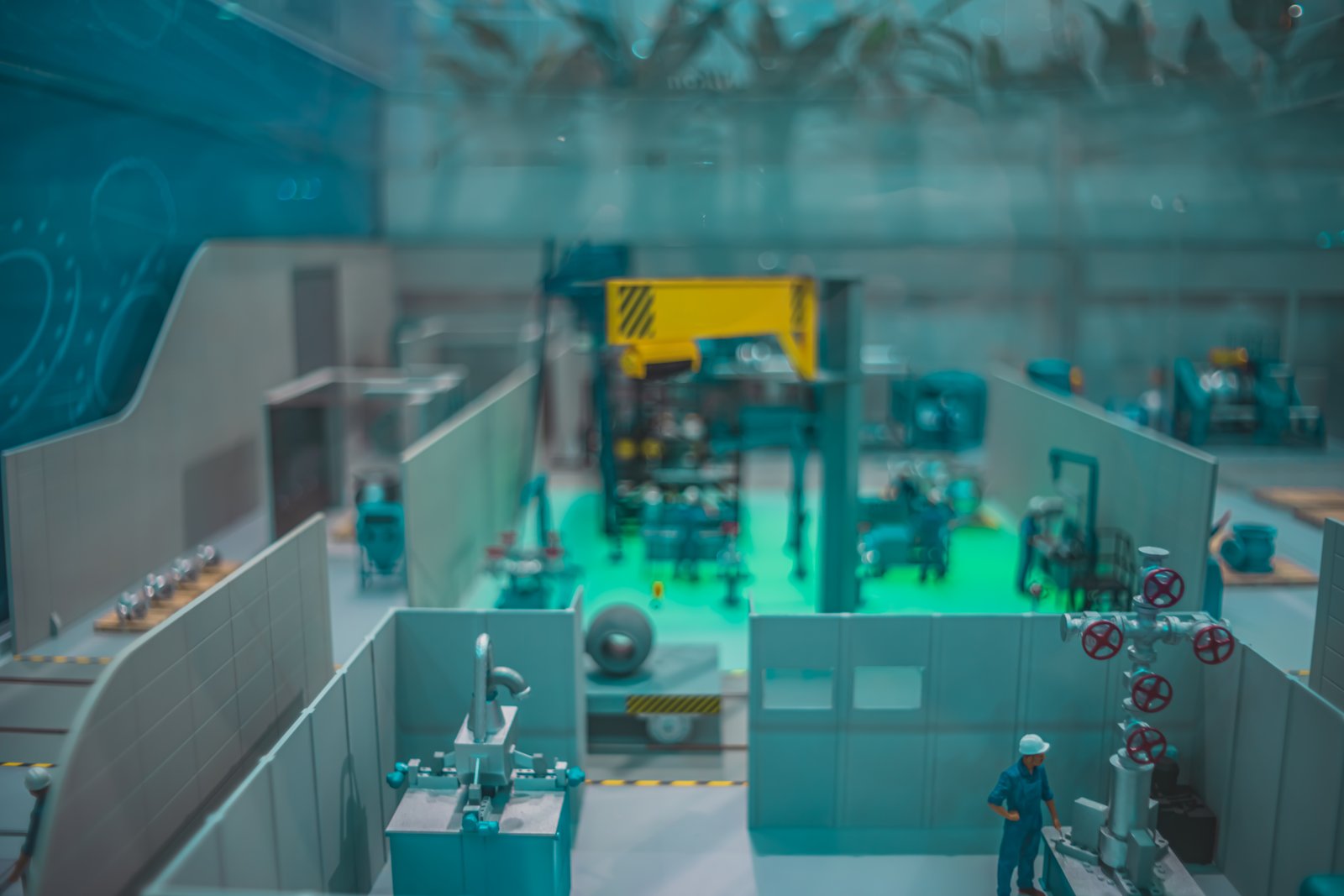
A digital twin is not a 3D model. That confusion trips up more conversations about this technology than any other single misunderstanding. A digital twin is a live, continuously updated virtual replica of a physical asset, production line, or process, fed by real sensor data, so that changes in the real world show up in the virtual version in something close to real time. The model looks similar to a static CAD file. What it does is entirely different: it lets engineers test a change, a new schedule, a different material, a faster line speed, virtually before touching the actual equipment.
Why digital twins matter now, specifically
The timing here is not arbitrary. Digital twins depend on exactly the sensor infrastructure and cloud processing that industrial automation spent the last several years building out, the same connectivity backbone we cover in our piece on five key functions automation has transformed. Without dense, reliable sensor data feeding it continuously, a digital twin is just an expensive static model. That infrastructure has only recently reached the point where a genuinely live twin is practical for a mid-sized manufacturer, not just a flagship plant with an unlimited IT budget.
What the market data actually shows about adoption
Growth estimates vary noticeably across research firms, which is itself worth flagging rather than picking whichever number sounds most impressive. One widely cited estimate puts the global digital twin market at $35.8 billion in 2025, growing toward roughly $49.5 billion in 2026, while the manufacturing-specific segment alone was estimated at around $8.12 billion in 2025 with a projected annual growth rate near 33% through the mid-2030s, according to market research aggregators. The spread between different estimates reflects how differently research firms define the category, not necessarily disagreement about the underlying trend, which is unambiguously upward.
Which sectors have actually deployed this, versus piloted it
Adoption is real but concentrated. Aerospace, automotive, electronics, and energy utilities have reached the highest deployment thresholds, with over 70% of manufacturers in those specific verticals reporting they are piloting or actively running digital twin projects, according to industry surveys. That is a meaningfully different claim than “most manufacturers use digital twins.” It means four capital-intensive, high-precision sectors are ahead of the curve, while the rest of manufacturing is watching and, in many cases, still evaluating whether the cost is justified for their own operation.
- Ahead of the curve: aerospace, automotive, electronics, energy utilities, over 70% piloting or deploying.
- Cited return: a majority of companies running mature digital twin programs report return on investment above 10%, with roughly half reporting 20% or more.
- Still limited: smaller manufacturers and sectors outside those four verticals, largely due to sensor retrofitting cost and IT infrastructure requirements.
What a digital twin is actually useful for, in plain terms
The clearest use cases are the ones that avoid a costly real-world mistake before it happens. Testing a new production schedule against a twin before committing the real line to it. Simulating how a new part design will behave under stress before a physical prototype is built. Running “what if a supplier shipment is delayed a week” scenarios against the twin of an entire supply chain rather than guessing. In each case, the value is the same: a wrong decision costs a few minutes of simulation time instead of a few days of real downtime.
The honest pitch for a digital twin is not that it makes a factory smarter. It is that it makes a factory’s mistakes cheaper, by moving them into simulation before they happen on the real line.
Where the maturity claims need real nuance
It would be easy to read the ROI figures above and conclude digital twins are now a safe, guaranteed investment. That is not quite right. Those returns are reported by companies running mature digital twin programs, meaning the figures describe survivors, not a representative sample of every attempt. Building a twin detailed and reliable enough to trust for real decisions requires sustained sensor investment and data engineering effort that a smaller manufacturer, without a dedicated data team, will genuinely struggle to justify against a single production line’s margins. A twin built on sparse or unreliable sensor data is worse than no twin at all, because it produces confident-looking simulations built on bad inputs.
What has to be in place before a digital twin makes sense
A twin is only as good as the data feeding it, which means the real prerequisite is a mature IoT sensor deployment, not twin software itself. We cover that underlying sensor layer, and why it deserves more attention than it usually gets, in our piece on IoT sensors as the backbone nobody talks about. A company evaluating a digital twin project without first confirming its sensor coverage is genuinely dense enough to feed one accurately is, in effect, starting the rollout at the wrong step, a mistake we cover more broadly in our piece on how an automation upgrade actually rolls out.
The realistic summary
Digital twins are past the experimental stage in a handful of capital-intensive sectors, and the return-on-investment evidence from mature programs is genuinely strong. They are not yet a universal manufacturing tool, and the sensor and data-engineering prerequisites mean the gap between “proven” and “practical for my plant” is still wide for most mid-sized operations. That gap is closing, driven by the same sensor cost declines reshaping industrial automation generally, but it has not closed yet.