
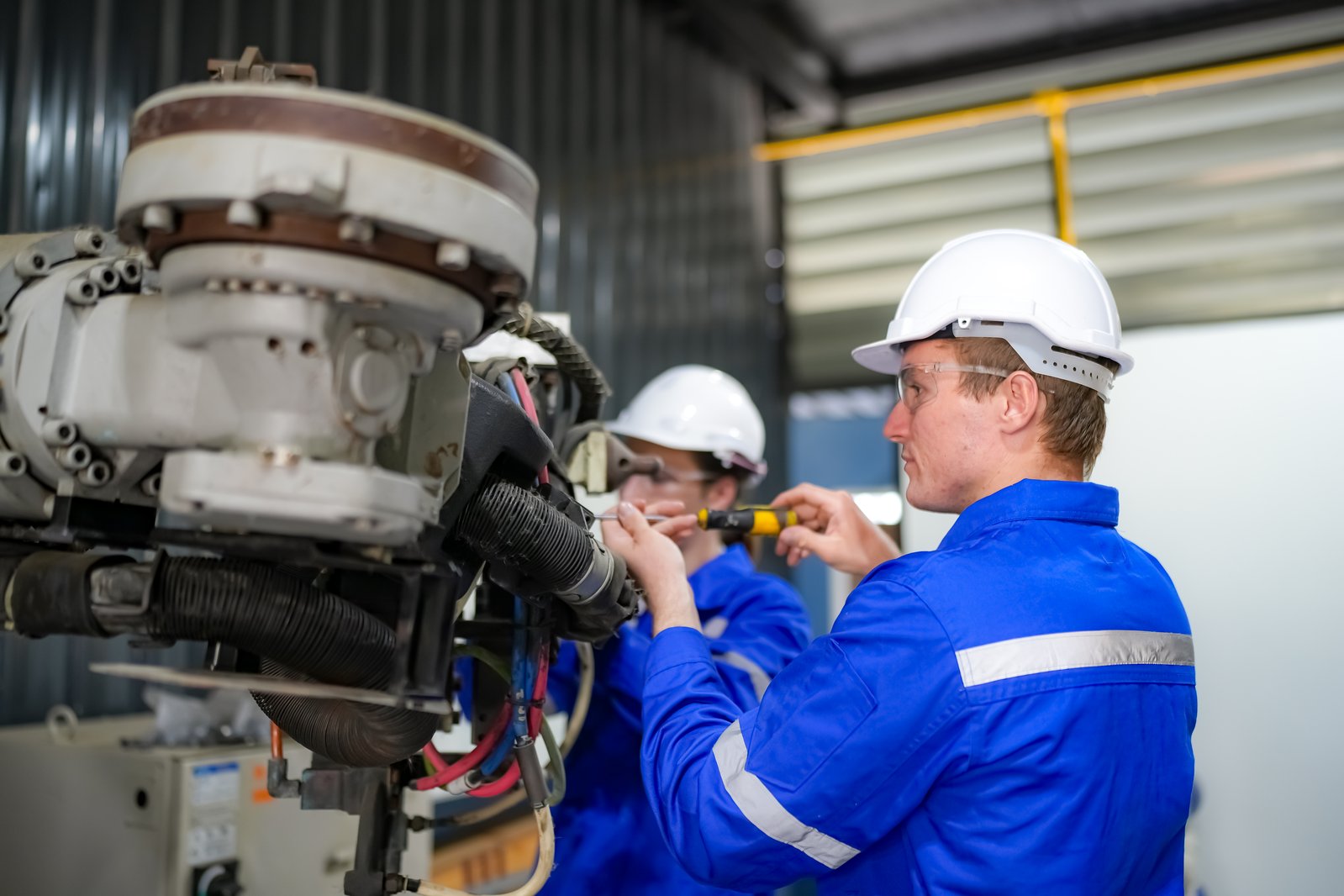
Most automation projects do not fail because the technology does not work. They fail because the rollout skipped a step that felt optional at the time and turned out not to be. Industry analyses of automation and AI-driven initiatives put the pattern in stark terms: a majority of these projects never get past the pilot phase at all, regardless of how well the underlying technology performs. Getting from an idea to a running production line is less about picking the right robot and more about sequencing the decision correctly, in an order most teams under deadline pressure are tempted to skip.
Step one: assess before you shop for equipment
The first real step is not choosing a vendor. It is a honest audit of what is actually slowing the line down today, bottleneck by bottleneck, and whether that bottleneck is a task automation can fix or a process problem automation will simply make faster and more expensive. A useful illustrative example: a mid-sized parts manufacturer, generic and hypothetical rather than any specific real company, might discover during this stage that its perceived “robot problem” is actually a scheduling problem no robot would solve on its own. Skipping this step is the single most common reason later stages disappoint.
Step two: pilot on one line, not the whole floor
Once a genuine automation-solvable bottleneck is identified, the discipline is to prove it on a single line or cell before touching anything else. This is where most of the real learning happens, integration friction with existing equipment, operator adjustment time, unexpected maintenance needs, and it is far cheaper to discover all of that on one line than across an entire facility. A pilot that skips this containment and tries to scale immediately is exactly the pattern behind projects that “perform well as a prototype” and then collapse once volume increases, because scalability was never actually tested.
- Assess: audit real bottlenecks, confirm automation actually addresses the root cause.
- Pilot: contain the first deployment to one line or cell, budget for a genuine learning period.
- Measure: track downtime, defect rate, and worker feedback against a real baseline, not a vendor projection.
- Scale: expand only once the pilot’s numbers hold up under real production volume, not prototype volume.
- Retrain and support: build ongoing training and maintenance budget in from day one, not as an afterthought.
Step three: measure against a real baseline, not a vendor’s projection
A pilot only means something if it is measured against what the line actually did before, not against a vendor’s marketing projection of what similar equipment achieves elsewhere. This step should track hard numbers, downtime, defect rate, throughput, alongside a genuinely underweighted one: how the workers actually operating alongside the new system are adjusting. A pilot that looks excellent on throughput but is quietly generating operator frustration or safety near-misses is not actually ready to scale, whatever the productivity dashboard says.
A pilot that has not been measured against its own line’s real baseline, with real workers reporting real friction, has not actually been tested. It has only been demonstrated.
Step four: scale deliberately, and expect the timeline to move
Rollout timelines for automation projects typically run in phases rather than a single leap: an initial redesign and planning phase, an implementation phase, and a dedicated pilot and optimization window before wider scaling even begins, according to industry project-management guidance on automation deployments. Software-based automation can move through those phases in a matter of weeks; capital-intensive robotics and physical retrofits on legacy equipment routinely take considerably longer, and pretending otherwise is exactly where budgets and expectations go wrong together.
Why scaling too fast is the most common failure point
The evidence on scaling failure is not subtle: a large share of production automation systems that perform well in prototype or pilot conditions run into serious trouble the moment volume, product variation, or shift patterns change at real scale. That is not a sign the technology was wrong. It is a sign scalability was never actually part of the pilot’s design criteria in the first place, something worth checking explicitly before declaring a pilot successful.
Step five: budget for retraining and support before you need it
The rollout does not end when the equipment turns on. Ongoing model maintenance, sensor recalibration, and worker retraining are recurring costs, not one-time ones, and skipping this budget line is one of the more common ways a genuinely well-piloted project quietly underperforms a year later. We go deeper on exactly how large these ongoing costs tend to be, and where companies most often underestimate them, in our piece on the hidden cost of automation.
A rollout worth comparing against, illustratively
Picture a generic mid-sized manufacturer, again illustrative rather than a specific real case, that spends six weeks on assessment before touching a single piece of equipment, runs a twelve-week pilot on one packaging line, tracks both throughput and operator feedback weekly, and only greenlights a facility-wide rollout once the pilot line matches its projected numbers under actual production volume, not test-run volume. That sequencing is unglamorous. It is also, based on the pattern behind failed rollouts, close to the only sequencing that reliably works.
None of this guarantees success, and no honest piece about automation rollouts should claim it does. What sequencing this way does is remove the most common, most avoidable reasons projects stall: skipping the assessment, scaling before the pilot proves itself, and treating retraining as optional rather than budgeted. For the wider functions this kind of rollout typically targets first, our overview of five key functions automation is transforming is a useful starting map before the assessment stage even begins.