
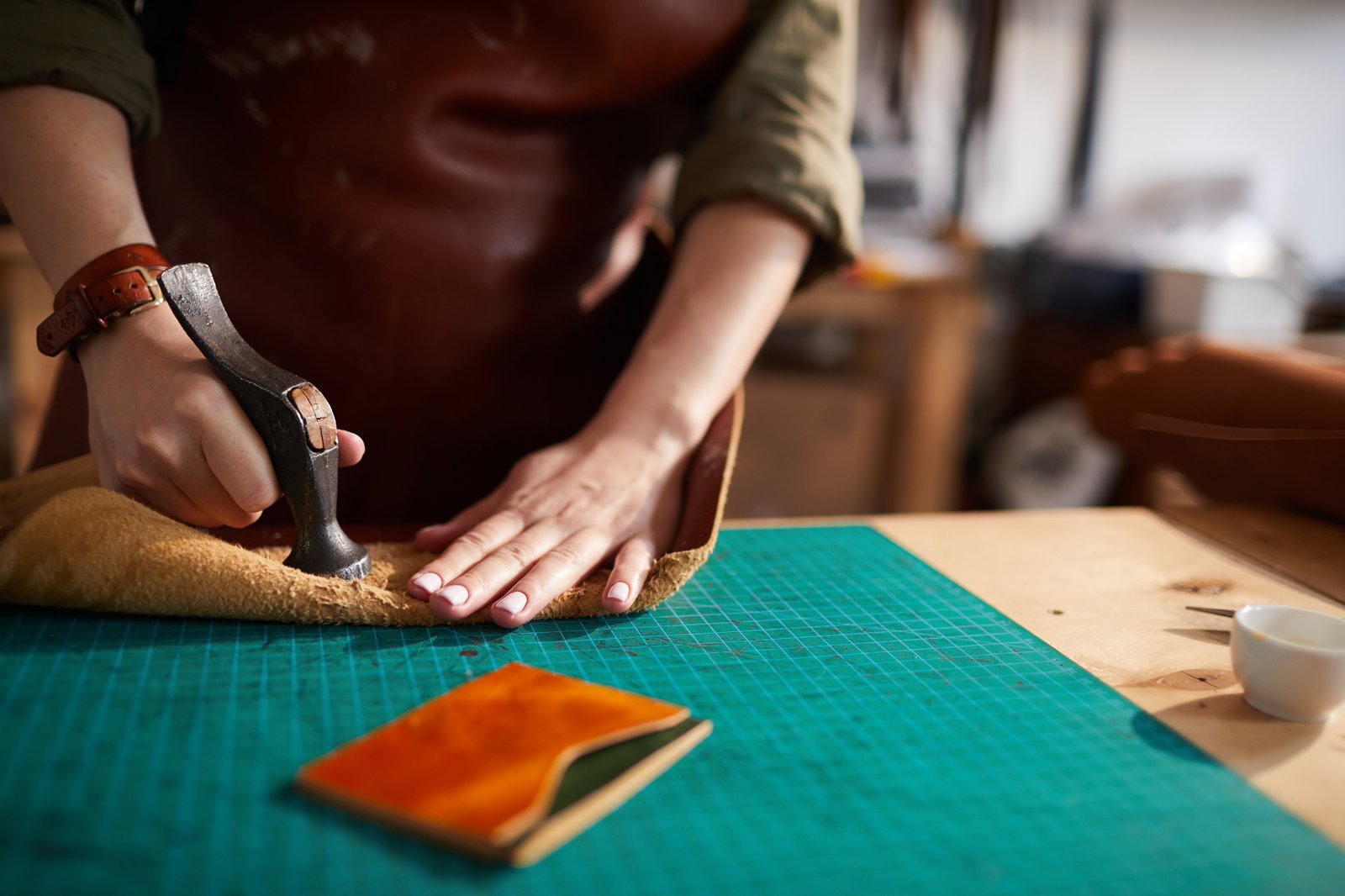
It is tempting to treat this as a morality tale: craftsmanship as the virtuous underdog, mass production as the soulless machine that ran it over. That framing feels satisfying, and it is also lazy. Mass production did not win the twentieth century by accident. It solved real problems that craftsmanship, on its own, was never going to solve at the scale a growing global population actually needed. A fair comparison has to hold both truths at once.
Where mass production came from, and why it won so completely
The Arts and Crafts movement, associated most closely with William Morris in the late nineteenth century, emerged as a direct reaction against the Industrial Revolution’s effect on ordinary goods: repetitive factory labor, a perceived loss of skill in the objects people used every day, and what Morris and his contemporaries saw as the soullessness of machine-made output. Morris’s own response was to found workshops dedicated to recapturing pre-industrial standards of craft. It is worth being honest about how that story actually ended: mass production did not retreat. It expanded, because it solved a problem craftsmanship structurally cannot: producing enough goods, at a low enough price, for a population that industrialization itself was rapidly growing.
What mass production genuinely gets right
Affordability is the most obvious gain, but it is not the only one. Consistency is arguably the more underrated benefit: a mass-produced item behaves the same way every single time, which matters enormously for anything safety-critical, a car part, a electrical component, a piece of medical equipment, where variation is a genuine liability rather than a charming quirk. Accessibility follows directly from both: goods that would otherwise be reserved for a wealthy minority become available to households that could never have afforded a handmade equivalent. None of this is a footnote to be waved past on the way to praising craftsmanship. It is the actual reason billions of people have reliable access to clothing, furniture, and tools at all.
What gets lost inside that same efficiency
The trade-off is real, and it shows up in specific, nameable ways rather than vague sentimentality. Mass production, by design, removes the maker’s individual judgment from the process, which means an object’s response to unusual or unexpected conditions, an oddly shaped repair, a material with a natural flaw, is handled by a fixed rule rather than a person adapting in real time. That rigidity is precisely why a mass-produced item often fails at exactly the same point every time, the same seam, the same joint, since a design flaw baked into the process repeats identically at scale rather than getting caught and corrected object by object the way a careful maker might catch it.
What craftsmanship gets right that scale cannot replicate
A handmade object’s biggest genuine advantage is adaptability at the point of making: a craftsperson can respond to an unusual material, an unusual request, or an unusual flaw in real time, producing a result a fixed industrial process cannot. Durability is a related, often underrated advantage, not because handmade objects are automatically built to last longer in every case, but because a skilled maker working directly with a material tends to notice and correct weaknesses a standardized process has no mechanism to catch. And there is a harder-to-quantify factor worth naming honestly: a traceable connection between an object and the specific person and decisions behind it, which a supply chain spanning several anonymous factories simply cannot offer, whatever marketing language gets applied to it after the fact.
What craftsmanship cannot solve, and should not pretend to
Scale is the honest limit. A skilled maker can only produce so many objects in a year, which means craftsmanship, by its nature, cannot meet mass demand at a price most households can afford, and pretending otherwise does the whole category a disservice. This is exactly why the “handmade versus mass-produced” framing so often collapses into false choice territory: for many categories of goods, especially anything safety-regulated or produced at true necessity scale, mass production is not a compromise. It is the only realistic answer.
| Dimension | Mass production | Craftsmanship |
|---|---|---|
| Cost per unit | Low, drops further with volume | High, tied directly to skilled labor hours |
| Consistency | Very high, identical output by design | Variable, each piece carries small differences |
| Adaptability to flaws | Low, fixed process handles all inputs the same way | High, maker adjusts in real time |
| Scale | Effectively unlimited | Bounded by one maker’s available hours |
| Traceability | Low, often several anonymous production steps | High, a direct line to a specific maker’s decisions |
The more useful question than “which is better”
The more productive framing is not choosing a winner, but matching the right production model to the right category of object. A surgical instrument benefits from mass production’s consistency in ways that would make craftsmanship actively dangerous. A one-off piece of furniture meant to last decades benefits from a maker’s judgment in ways mass production structurally cannot replicate. Both models are correct, in their own domain. For a precise definition of what actually distinguishes handicraft from both mass production and fine art, our piece on what handicraft actually means lays out that boundary in detail. And for the specific cost breakdown behind why handmade goods carry the price they do, see our look at the economics of slow-made goods.
What this means going forward
Rather than treating tradition and industrial scale as permanent opposites, the more interesting shift happening now is workshops borrowing selectively from both models, keeping a maker’s judgment where it adds real value while adopting industrial tools where they remove genuinely wasteful trial and error. We cover that blending directly in our piece on tradition as a springboard for innovation. The honest conclusion is not that one approach lost and the other won. It is that each solves a problem the other one cannot.