
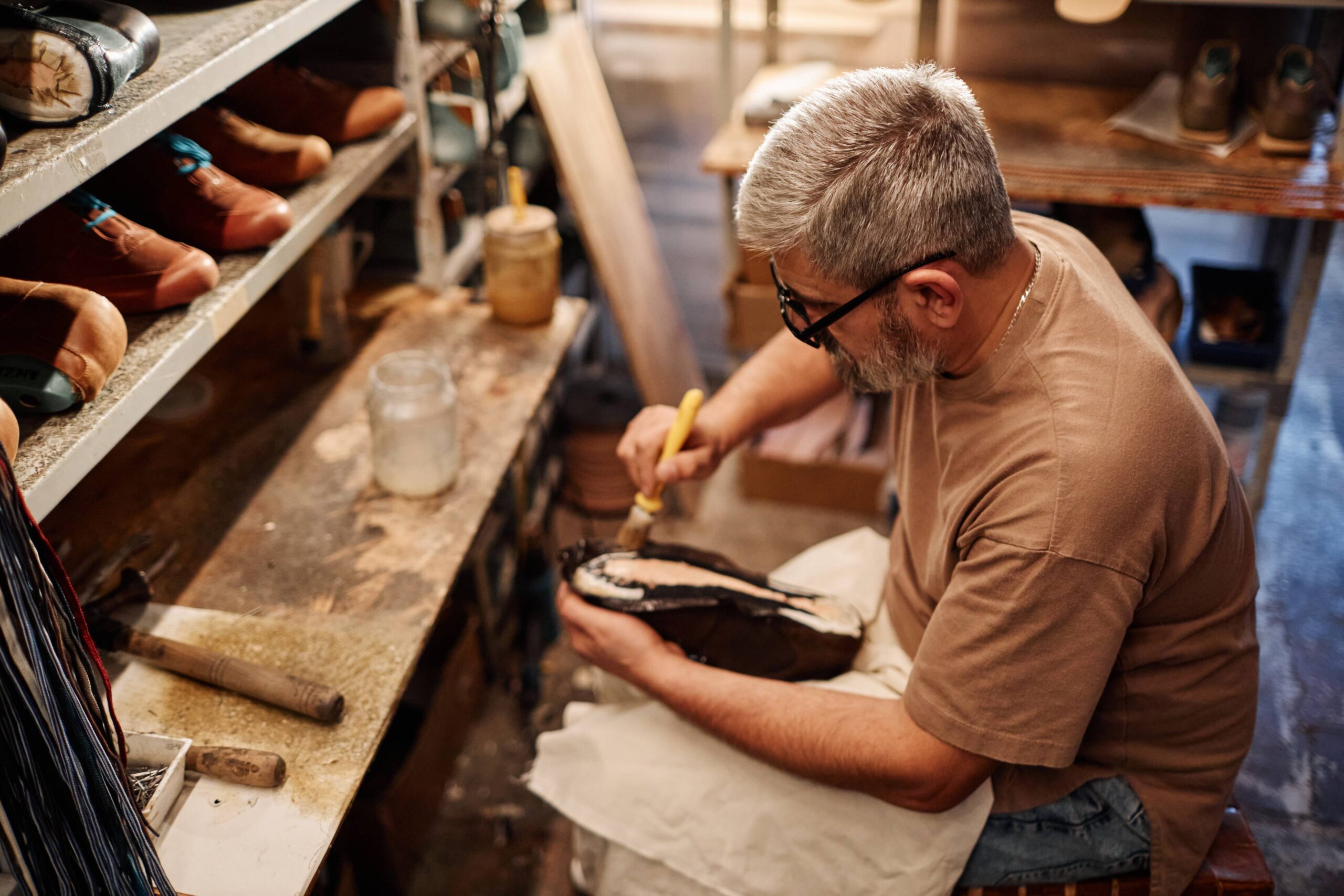
It is easy to assume that tradition and innovation sit on opposite ends of a spectrum, one looking backward, the other forward. Spend time with businesses that have actually survived multiple generations, and that assumption starts to look thin. The ones still standing rarely did it by freezing their methods in place. They did it by treating their craft as a foundation sturdy enough to build something new on top of, rather than a museum piece to protect from change.
What tradition is actually offering a modern business
Strip away the nostalgia, and tradition in a business context is really a claim about trust: a history of doing something reliably, long enough that customers stopped needing to verify it themselves. In a market saturated with new brands making unverifiable promises, that accumulated trust is genuinely scarce, and genuinely valuable. Consumers who cannot easily tell one anonymous product from another gravitate toward the ones with a real, traceable history behind them.
That is not an argument for standing still. It is an argument for knowing exactly which parts of a practice are load-bearing, the skill, the material knowledge, the standard of quality, and which parts were simply how things happened to be done because the tools of the time demanded it. The second category is exactly where innovation has room to work.
Where the two actually meet
| What stays traditional | What gets reinterpreted |
|---|---|
| Core hand skill and material knowledge | Tools used to execute it (digital modeling alongside hand tools) |
| Standard of quality and finish | Distribution and how the work reaches a customer |
| The story and provenance of the practice | How that story is documented and shared |
A workshop that starts using 3D modeling to plan a piece before cutting a single board has not abandoned its craft. It has simply moved the wasteful part of the trial and error, the failed cut, the ill-fitting joint, into a space where mistakes are free. The hands that finish the piece still need the same decades of accumulated judgment they always did.
The market is rewarding this pairing, not punishing it
This is not a marginal or nostalgic trend. The global handicrafts market reached close to $987 billion in 2025 and is on a trajectory well past $2 trillion within the next decade. In the United States specifically, about 64% of consumers buy handcrafted products at least once a year, and roughly 51% actively prefer goods produced locally over anonymous mass-market alternatives. Online marketplaces built specifically around artisan goods are the fastest-growing distribution channel in the category, which is itself a case of tradition and modern infrastructure reinforcing each other rather than competing.
The succession problem hiding inside every family workshop
Multi-generational craft businesses face a specific version of this challenge that rarely gets discussed openly: the founder or current master holds an enormous amount of undocumented judgment, which material to reject, how to adjust a technique for an unusual commission, that has never needed to be written down because it lived in one person’s hands. Bringing in modern tools, documentation practices, digital modeling, recorded process video, is often less about efficiency and more about survival: making sure that judgment actually transfers to the next generation instead of retiring along with the person who built it.
Investment is starting to follow the same logic
A growing number of investors and acquirers are specifically seeking out heritage brands with a genuine, defensible technical practice behind them, rather than a generic “artisanal” marketing story layered on top of an ordinary supply chain. The distinction matters to a buyer’s due diligence: a brand built on a real, hard-to-replicate skill has a moat a purely aesthetic brand does not. That shift is pushing more traditional workshops to formalize exactly the kind of documentation, of technique, of provenance, of process, that used to live only in an owner’s head, since it is now also what makes the business valuable to someone evaluating whether to invest in or acquire it. A skill that only exists in one person’s hands is, from an investor’s perspective, an unquantifiable risk sitting right at the center of the balance sheet, no matter how strong that year’s sales figures look. Documenting that knowledge properly, in writing, on video, in a structured training program, turns an unquantifiable risk back into an asset someone can actually put a number on, and gives the next generation of makers a real, properly documented starting point to build from, instead of an entire decade of unassisted trial and error just to relearn what already existed.
Two threads worth following further
This pairing of old skill and new tool shows up in several distinct ways depending on what part of the practice gets modernized first. When the emphasis is on how the next generation actually learns the skill, hands-on rather than purely theoretical, that is the ground we cover in our look at the future of craft education. When the emphasis is on preserving and documenting a practice through technology rather than teaching it directly, that is the territory of digital heritage and handcraft preservation.
Tradition, treated properly, was never the opposite of innovation. It is the accumulated proof that a way of doing something actually works, which is precisely the kind of evidence any genuine innovation needs to be built on rather than around.