
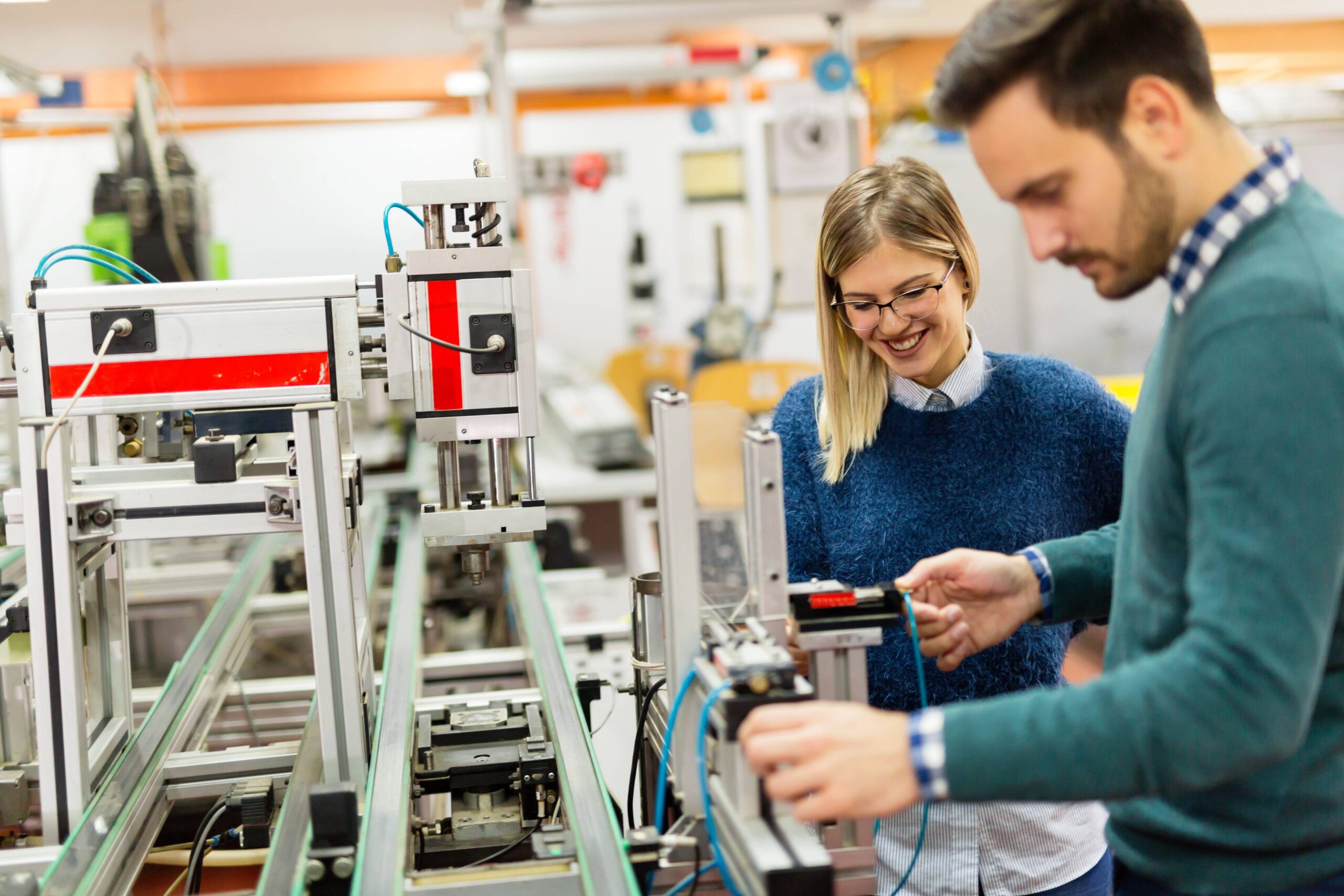
About a quarter of schools now have some form of dedicated makerspace, a number that keeps climbing as districts look for a counterweight to a curriculum that has grown increasingly screen-based. That growth is not really a maker-movement fashion. It reads more like a correction, a recognition that something got lost when learning moved almost entirely onto a screen.
Two very different kinds of makerspace, and both are growing
The word “makerspace” covers a wider range of setups than people usually picture. Some schools are building high-tech versions equipped with 3D printers, laser cutters, and CNC machines, tools that let students prototype genuinely functional objects. Others are going in the opposite direction with low-tech spaces built around cardboard, building blocks, and simple hand tools, on the theory that the tactile problem-solving matters more than the sophistication of the equipment. Mobile maker carts, which bring hands-on materials to a classroom that has no dedicated space at all, are a growing third option built specifically for schools that cannot afford a fixed room for either.
That range matters because it undercuts the assumption that craft education is really about access to expensive equipment. A cardboard-and-glue-gun classroom is teaching the same underlying skill, iterate, test, fail usefully, try again, as a room full of 3D printers. The equipment changes the ceiling of what can be built. It does not change what the practice is actually teaching.
Why this is landing differently than it did a decade ago
Craft and maker education is not new. What has changed is the reason schools are investing in it. A decade ago, the pitch was mostly about STEM enrichment. Now, a large part of the momentum is coming from concern over screen time and a desire to bring back tactile, hands-on learning specifically as a counterbalance to it. The subject matter feels almost secondary to the format: working with your hands, on something physical, that either works or doesn’t, in a way a spreadsheet or a slideshow never quite forces you to confront.
The teacher training gap that determines whether any of this works
A makerspace full of equipment is only as good as the teacher who knows how to run a lesson in it, and that is where a lot of well-funded programs quietly stall. Teacher development is one of the explicit focus areas in current maker education research, alongside AI and design thinking, precisely because buying a 3D printer is the easy part of the investment. A teacher who has spent a career on traditional lesson plans needs real, sustained training to run a project-based, hands-on session confidently, and that training budget is far easier for a district to cut than the hardware line item, since a room full of unused equipment is less visible in a budget review than a missing purchase order. The schools getting genuine results tend to treat training as an ongoing line item that renews every year, not a one-time workshop delivered the week the equipment arrives and never revisited again. That renewal is the unglamorous detail separating a makerspace that genuinely gets used every single week from one that quietly turns into an expensive storage closet by the second semester of its very first year in operation.
Equity is part of the real story, not just the marketing copy around it
A meaningful share of the current push is explicitly about making these spaces available regardless of a school’s zip code, rather than treating them as an enrichment perk available only to well-funded districts. That framing matters because craft skills have historically been transmitted informally, through family workshops, apprenticeships, community trades, which quietly excludes students without that background. A school makerspace, done well, is one of the few settings that can offer that same hands-on transmission to a student who would otherwise never encounter it.
Where this is converging with artificial intelligence, not competing with it
Somewhat counterintuitively, one of the clearer trends in maker education right now is deeper integration with artificial intelligence rather than a retreat from it, alongside design thinking and project-based learning more broadly. That pairing makes more sense than it first sounds: AI tools can help a student iterate on a design faster, but the physical build, the part where an idea has to survive contact with real material and real dimensions, is exactly the step that keeps the process honest.
Craft education, in that sense, is not a nostalgic rejection of a digital childhood. It is turning out to be one of the more durable answers to it, precisely because it is the one part of the curriculum a screen cannot fully substitute for. For a broader look at how that same tension between tradition and new tools plays out beyond the classroom, see our piece on tradition as a springboard for innovation.