
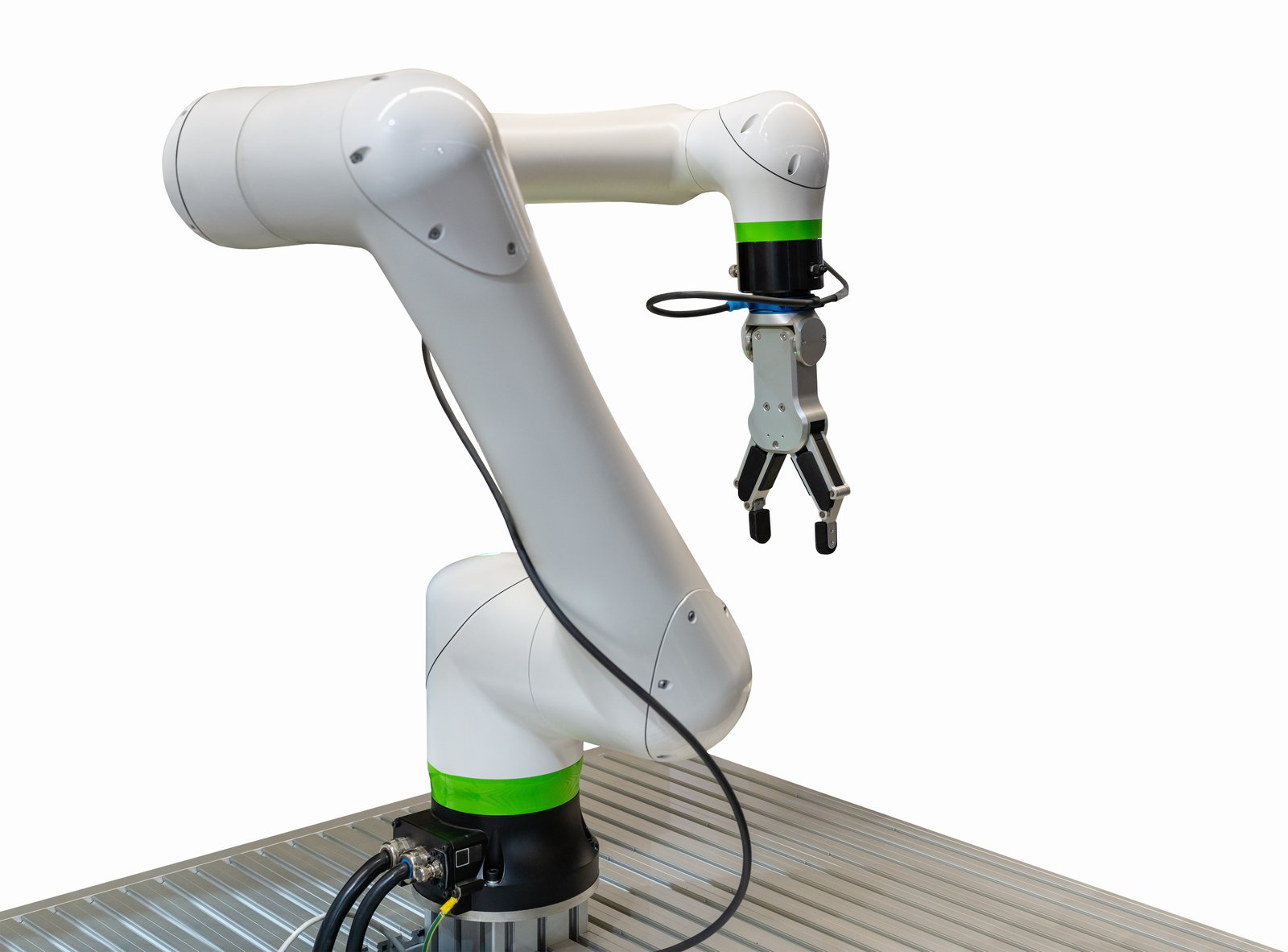
Here is a fact that surprises most people outside the robotics field: a large share of an industrial robot’s total environmental footprint has nothing to do with the metal and plastic used to build it. Internal studies from ABB, one of the largest industrial robotics manufacturers, found that more than 70% of a customer robot’s carbon footprint comes from the electricity it consumes during its operating life, not its manufacturing or disposal. That single number reframes what “sustainable robotics” actually means: it is mostly a question of how efficiently a robot runs, for years, not how it was built.
Why energy use, not materials, is the real sustainability lever
Because operating electricity dominates a robot’s footprint, the sustainability gains that matter most come from motion efficiency: how a robot accelerates, decelerates, and idles across a shift. Industrial robots run on repeated, programmable motion cycles, which makes them unusually well suited to optimization compared to human-operated equipment. A robot that stands idle drawing power between cycles is an unglamorous but real source of waste, and manufacturers are increasingly tuning idle-state power draw the same way data centers tune server sleep states.
Precision is where robotics earns its sustainability case beyond energy
Energy is only half the story. The other half is material waste avoidance: a robotic arm executing the same cut, weld, or dispensing motion thousands of times with sub-millimeter consistency produces far less scrap than a human operator doing the same task across an eight-hour shift, fatigue included. Fewer rejected parts means less wasted raw material, less rework energy, and fewer defective units that end up scrapped rather than shipped. This is a distinct mechanism from the recycling and circular-material story we cover in our piece on circular industry and how innovation enables recycling and reuse; this is about waste never being created in the first place, not waste being recovered afterward.
- Motion efficiency: optimized acceleration and idle-state power draw cut operating electricity use.
- Precision: sub-millimeter repeatability reduces scrap and rework compared to manual production.
- Uptime consistency: fewer restarts and calibration cycles mean less energy spent on non-productive motion.
- Standardized measurement: a new ISO specification, due by August 2026, will let buyers actually compare robot energy efficiency across manufacturers.
The industry is only now agreeing on how to measure this
It is worth being honest about a real gap here: until very recently, there was no standardized way to even compare how energy-efficient one industrial robot was against another. ABB is leading a working group with eleven other countries to develop a technical specification for the International Organization for Standardization on exactly this, measuring robot energy consumption and efficiency consistently, with completion targeted for August 2026. That a standard is only arriving now says something important about the maturity of this field: manufacturers have been making efficiency claims for years without a common yardstick to verify them against.
What this means for buying decisions today
Until that standard lands, a manufacturer comparing robot models on energy efficiency is largely relying on vendor-specific figures that are not directly comparable. That is a real limitation worth naming rather than glossing over, and it is one reason sustainability claims around robotics should be read carefully until standardized measurement actually exists.
The bigger context: industrial energy use is not small
Robotics efficiency matters at scale because industry is a genuinely large energy consumer to begin with. The industrial sector accounted for 25.1% of final energy use in the EU in 2022, with electricity making up the largest single share at 33%, according to EU energy statistics, and the bloc has committed to cutting overall energy consumption by at least 11.7% by 2030. Robotics alone will not deliver that target. But with more than four million industrial robots now operating worldwide according to the International Federation of Robotics, even modest per-unit efficiency gains compound into a meaningful aggregate reduction.
A single robot running a few percentage points more efficiently is a rounding error. Four million robots running a few percentage points more efficiently is an industrial energy story worth taking seriously.
Where this genuinely delivers today, and where it does not yet
Being precise about maturity matters here more than almost anywhere else in this cluster. What is proven: robots reduce material waste through precision, and vendors are actively engineering lower idle and motion energy draw into newer models. What is not yet proven at scale: cross-vendor comparability of energy claims, until the ISO specification ships, and full-fleet retrofits of older robot installations, which were rarely designed with today’s energy-efficiency expectations in mind and are expensive to replace purely for that reason. Smaller manufacturers running older robotic cells are, realistically, not going to swap them out solely for incremental energy savings; the payback period rarely justifies it on its own.
How this fits the wider Industry 5.0 sustainability pillar
Robotics is one concrete, measurable piece of the sustainability pillar we describe in our broader comparison of our comparison of the Industry 4.0 and 5.0 paradigms. It sits alongside, but is genuinely distinct from, the circular-economy and product-design work covered in our pieces on designing products for circularity. Robotics is about how efficiently something gets made; circularity is about what happens to it after.
The realistic summary is that robotics already delivers real sustainability value through precision and waste reduction, energy efficiency gains are real but not yet reliably comparable across vendors, and the biggest remaining lever, standardized measurement, is arriving within the next year rather than already in place. That is a genuinely useful, if less dramatic, story than “robots are green now.”