
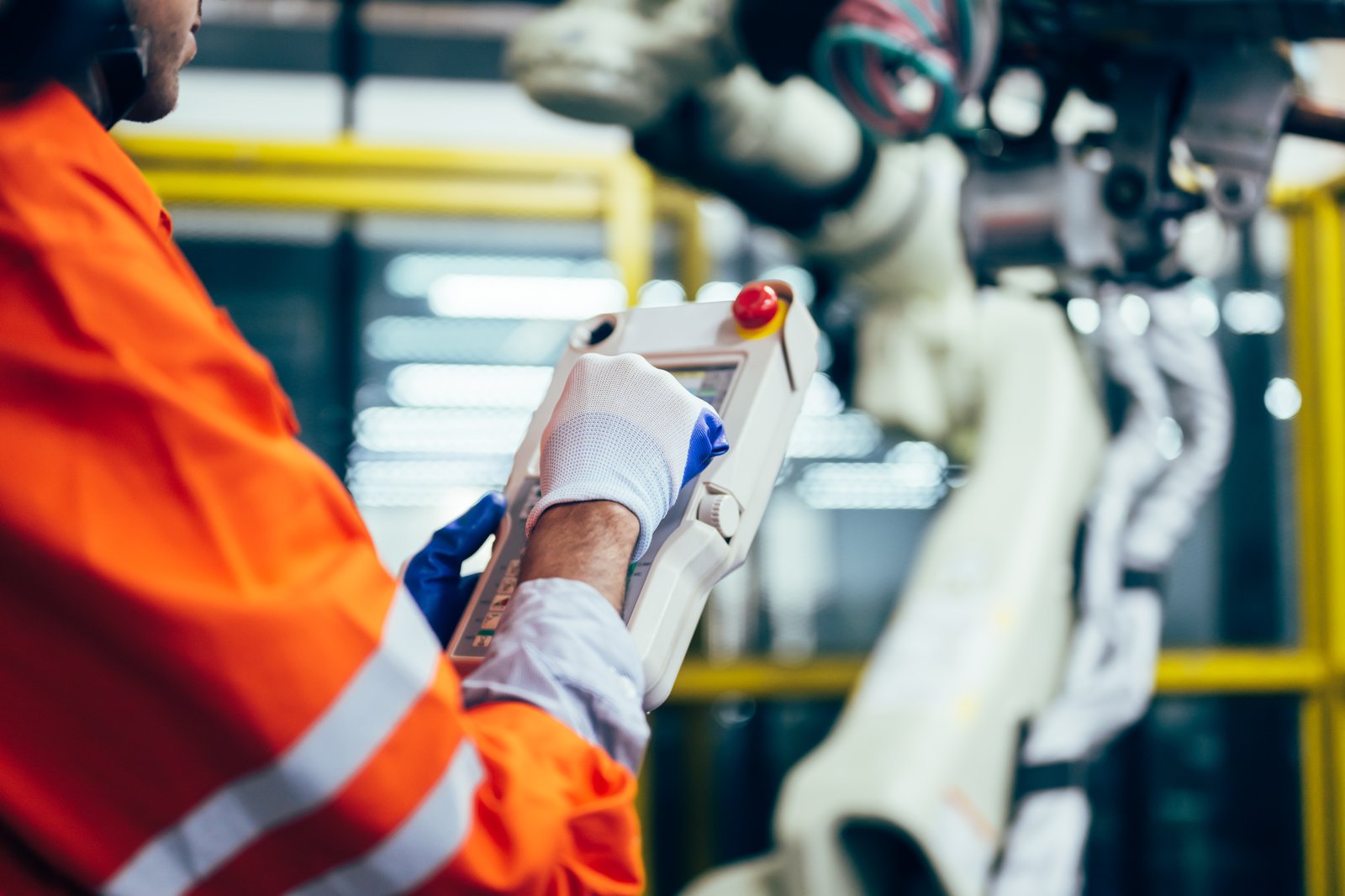
A robot arm that never gets tired is not, by itself, a good outcome for the person standing next to it. That is the uncomfortable observation sitting underneath the European Union’s decision to build “human-centricity” into its Industry 5.0 framework as a formal pillar rather than a talking point. Human-centric automation means designing systems where technology adapts to the worker, their safety, their skills, their wellbeing, rather than designing the worker’s role around whatever the technology happens to require.
What “human-centricity” means as an actual design requirement
The European Commission defines human-centricity as placing the wellbeing of the industry worker at the center of the production process, using technology to serve people rather than the other way around. Concretely, that means reinvigorating human judgment in decision-making, design, and manufacturing, and treating workers as a central asset rather than what the framework’s own literature bluntly calls a historical “weak point” to be engineered around. That reframing matters more than it sounds: it shifts the design question from “how do we remove the human” to “how do we make the human’s job better.”
Why this pillar exists at all
Industry 4.0 optimized hard for efficiency and, in doing so, treated the person on the floor mostly as a source of error to be minimized. The human-centricity pillar is a direct correction to that blind spot, and it did not appear in a vacuum. It sits alongside sustainability and resilience as one of three pillars in the Commission’s official framework, reflecting a broader European policy priority around “an economy that works for people,” not merely one that works efficiently.
- Worker safety and physical wellbeing built into system design, not added after an incident.
- Skills and empowerment: workers trained to direct automation, not just tend it.
- Ergonomic collaboration: cobots and interfaces designed around human limits, not just machine capability.
- Wellbeing of surrounding communities, not only the individual worker.
Where this shows up on an actual floor
In practice, human-centricity looks less dramatic than the framework’s language suggests. It is a collaborative robot (cobot) built with force-feedback sensors so it stops the instant it contacts a person, rather than requiring a safety cage. It is an augmented reality overlay that shows a technician exactly where to place a tool, cutting the training time a task used to require. It is a scheduling system that flags when a shift pattern is producing fatigue-driven errors, and adjusts before a safety incident forces the conversation. None of these are exotic. What makes them “human-centric” is that worker experience was the design brief from the start, not a retrofit.
How this differs from the automation cluster’s other angles
It is worth being precise about scope here, because this pillar gets confused with adjacent topics constantly. Human-centricity is not the same conversation as the broader Industry 4.0 versus Industry 5.0 comparison, which covers the full paradigm shift, and it is not primarily about adoption statistics, which we cover separately in our piece on what’s actually real versus still experimental in Industry 5.0. This pillar is specifically about the worker, full stop.
The honest limits of how far this has actually gone
Here is where nuance is non-negotiable. Human-centricity remains, for the most part, a stated design principle in policy documents and pilot programs rather than a universal shop-floor reality. Retrofitting an existing production line with ergonomic cobots or AR training tools is a real capital expense, and it competes for budget against projects with a more obvious, immediate return like predictive maintenance, which we cover in our deeper look at predictive maintenance. Smaller manufacturers in particular are more likely to still be catching up on basic automation than actively redesigning workflows around worker wellbeing metrics.
Redefining workers from a liability to be minimized into a central asset to be developed is a genuinely different design philosophy. Whether that philosophy has actually reached most factory floors yet is a separate question, and the honest answer is: not fully, and not evenly.
What a genuinely human-centric rollout tends to prioritize
A typical rollout that takes this seriously, and this is illustrative rather than a specific real company’s story, tends to start with the roles carrying the highest physical strain or safety risk rather than the ones easiest to automate. It pairs new equipment with training time built into the schedule rather than squeezed around it, and it tracks wellbeing indicators, fatigue-related error rates, reported strain, turnover on the affected line, alongside the usual productivity numbers. That combination, tracking both sides of the ledger, is what actually separates a human-centric project from an efficiency project wearing the label.
Why this pillar is worth taking seriously regardless of the hype cycle
Setting aside how the term gets used in marketing decks, the underlying idea, that automation succeeds or fails partly on whether the people working alongside it are better or worse off, is not a soft add-on to industrial strategy. Worker turnover, training cost, and safety incidents carry real financial weight of their own. A framework that puts wellbeing on the same design sheet as throughput is, at minimum, addressing a cost that efficiency-only automation has historically externalized onto the workforce rather than solved.
The real promise of Industry 5.0’s human-centricity pillar is not that it makes factories more efficient, though it sometimes does. It is that it insists efficiency was never the only question worth asking about a production line in the first place.