
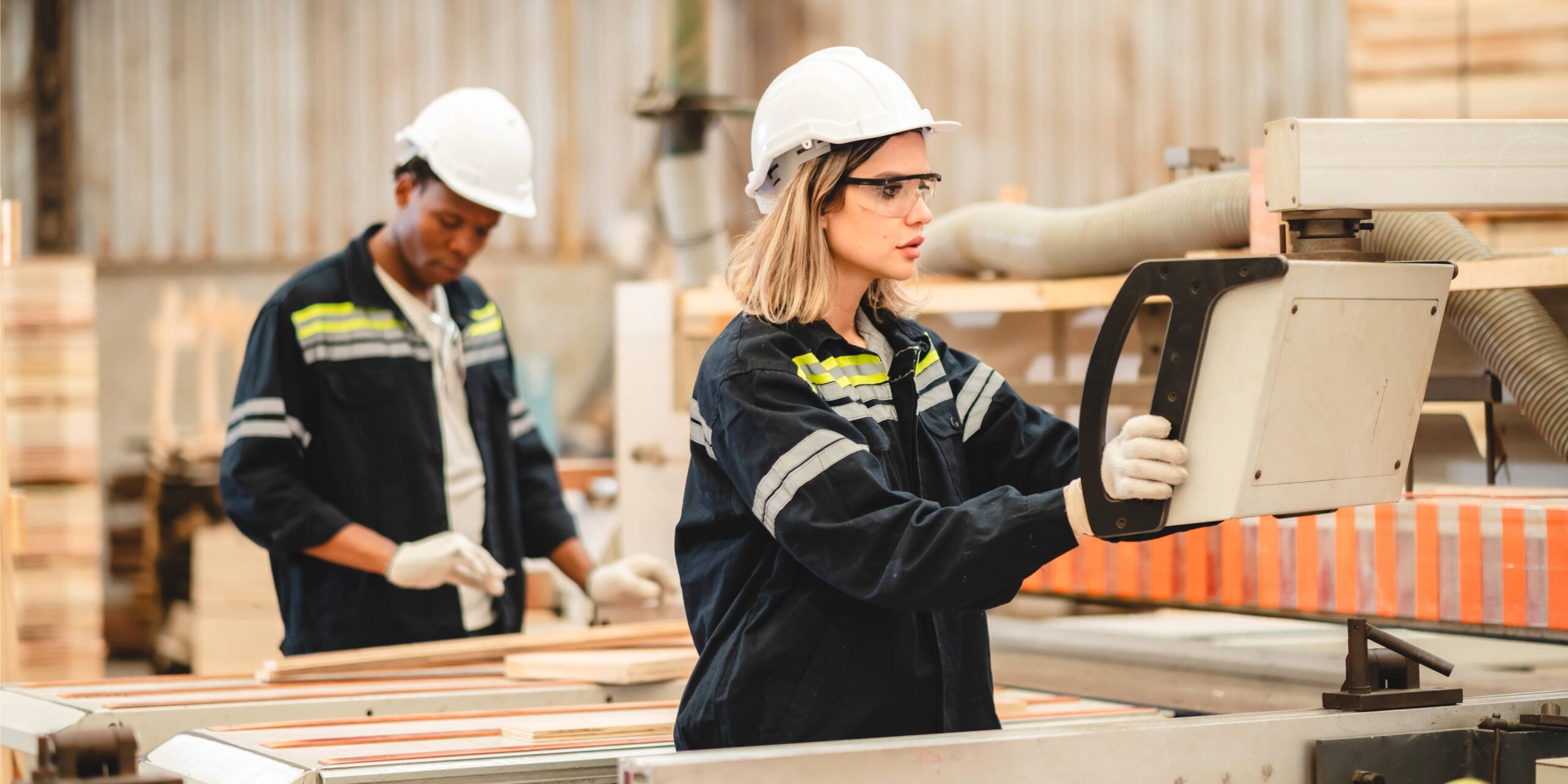
Roughly 60% of new automation deployments in 2026 involve autonomous mobile robots, machines that navigate a warehouse or plant floor on their own rather than following a fixed track. That single figure captures where Supply Chain 4.0 actually stands right now: past the pilot stage, into genuine, scaled deployment, but still concentrated in specific, well-defined tasks rather than running the whole operation end to end.
What connectivity actually buys a supply chain
The promise of smart manufacturing was always connectivity: machines sharing data with each other and with the people managing them, rather than operating as isolated islands. IoT sensors deployed across manufacturing settings now deliver on that promise in a fairly unglamorous but valuable way, tracking shipment conditions like temperature and humidity for goods that spoil or degrade, pharmaceuticals especially, and monitoring vehicle and equipment health closely enough to flag a likely failure before it happens on the road.

The numbers behind the shift
Global adoption of supply chain automation passed 40% across manufacturing and retail in 2025. Where it has taken hold, the results are hard to dismiss: manufacturers report productivity gains of up to 35%, and logistics providers achieve cost reductions of roughly 25%. Robotic systems have absorbed a large share of the repetitive, physically demanding work on a warehouse floor, freeing people for the judgment calls that still require a human: exception handling, quality decisions, supplier relationships.
Where blockchain quietly earns its place
Smart contracts, self-executing agreements recorded on a blockchain, have moved past the hype cycle into a specific, measurable use: reducing transaction fees by up to 50% and cutting administrative costs by around 40% in some manufacturing environments. The appeal is not novelty. It is removing a layer of manual reconciliation between parties who previously had to trust each other’s paperwork.
Connectivity is also the new attack surface
Every sensor and connected device added to a supply chain is also a potential entry point for an attacker, and the scale of that exposure is no longer theoretical. There are now roughly 21 billion connected devices in use globally, most of which were never designed with security as a first priority, and industrial IoT attacks specifically have increased by 75% over the past two years. Adversaries have also shifted upstream, compromising a device before it ever reaches a customer through tampered firmware or malicious code slipped into a component during manufacturing, rather than waiting to attack it after deployment.
The EU’s Cyber Resilience Act begins imposing reporting obligations on device manufacturers and operators in September 2026, which will push supply chain security from an IT department concern into a genuine board-level compliance question. The practical response most security teams recommend is demanding real transparency from suppliers: a documented software bill of materials, verified firmware provenance, and evidence of how a component was secured before it ever reached the factory floor, rather than trusting a supplier’s word after the fact.
ERP is the unglamorous backbone holding this together
None of this connectivity means much without a system tying it together. Enterprise resource planning software remains the operational spine of most of these deployments, consolidating data from finance, production, and logistics into a single platform so decisions get made on the same information rather than three conflicting spreadsheets. Cloud-based ERP in particular has given manufacturers the flexibility to scale these systems up without the capital expense of building out their own server infrastructure, which matters enormously for mid-sized manufacturers trying to compete with much larger, better-capitalized rivals.
The workforce question this raises, honestly
It would be dishonest to cover this shift without naming the obvious tension: a warehouse that automates its most repetitive roles changes what kind of jobs are available on that floor, not just how many. The more credible operators are treating this as a reskilling problem rather than a headcount problem, training existing staff to supervise and maintain the robotic systems rather than simply displacing them, since the exception-handling and maintenance work automation still cannot do tends to require exactly the floor-level operational knowledge those employees already have.
The part worth keeping in view
It is easy to describe all this as automation replacing people, and in some narrow tasks, that is exactly what is happening. But the more accurate pattern across the deployments actually delivering results is automation absorbing the repetitive layer of work while leaving exception handling, supplier negotiation, and strategic sourcing decisions with people. That is also where the decarbonization pressure covered in our piece on decarbonizing value chains increasingly intersects with pure operational efficiency: the same real-time visibility that flags a delayed shipment can also flag an unnecessary detour burning fuel it didn’t need to.
Supply Chain 4.0 is not a single finished system a company installs. It is a set of specific, provable use cases, robotics, IoT tracking, smart contracts, cloud ERP, that keep expanding in scope as each one proves its return on a narrower task first, provided the security of every newly connected device gets the same attention as its productivity gain, a trade a surprising number of rollouts still get backwards, prioritizing the productivity headline over the security review that should have shaped the deployment from day one.